Reflection on Meeting the Brief
1. My Microbit was able to read in the strength of the
radio signals sent by the other Microbits from a range
of -100 to -20.
2. My Microbits were able to be configured to work
either inside or outside, changing the distance they
needed to trigger. They also had a data collecting and a
standalone mode, where for the data collecting you
needed to have a server Microbit but for the other you
didn’t.
3. My project analysed the data in multiple ways. First
the Microbits themselves were looking at the distances
and determining whether or not they were too close.
Second the Python script connected to the server
Microbit also had an analysis component built in were if
the safety level of the Microbits was Dangerous it would
send out a signal.
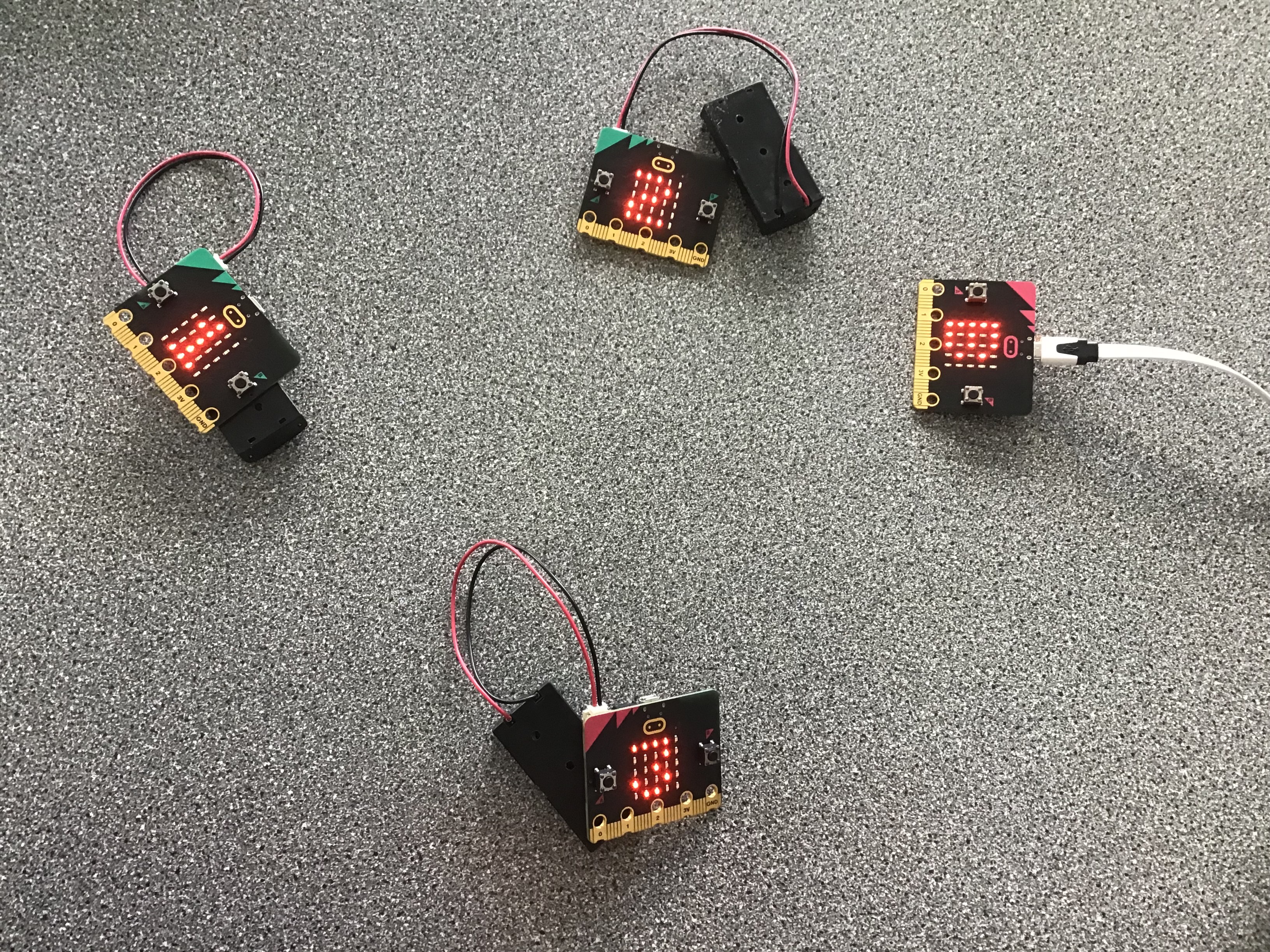
4. In my biggest test I used 3 client Microbits and 1
server Microbit. First, the clients needed to receive an
identification number from the server, next they waited
until the server sent them another message with the safe
distance to be used. Third they all successfully
received the packets from each other and then sent them
on until it got to the server Microbit. Finally the
Python script after analysing, sent a message back
through the serial USB port to the server Microbit if
the safety level was Dangerous and then the server
Microbit sent out a warning signal to all of the
connected client Microbits.
5. After the data came in through the server Microbit
the Python script analysed it and uploaded it to a
Google Firebase database where it was stored in the
cloud.
6. My Python script was able to determine the safe
levels, and also calculated the position of each
Microbit client in relation to the server Microbit. With
these positions and distance data, I made an interactive
website with two JavaScript graphs embedded in it, one
for the distances and another one that had a live map of
the Microbits.
Future Development of the Artefact
One aspect of the project that could always be improved
is the strength of the radio signals and their
reliability. This would greatly improve the live map
that I made and would be a better representation of the
real-life distances between each Microbit.
A feature which I didn’t have time to do but would have
liked to complete, was the ability to seamlessly connect
and disconnect to different server Microbits. This would
allow for a lot less error from the client side as the
person using it wouldn’t accidentally not turn on the
Microbit. It would also allow the clients to easily
disconnect not having to restart their Microbit. This
would be possible to achieve if a distance threshold was
programmed into the server, on which if the client
passed then it would disconnect, or an alternative way
would be if there are two different server Microbits in
range of the client then it would connect to the one
with the better signal i.e. the one closer.
This project could be expanded on by connecting multiple
server Microbits up to many different clients in
different classrooms. This could allow for example, the
principle on their computer to see the distances of all
the Microbits in each classroom and a live map of the
Microbits. The Microbits could be named after the person
carrying it so that on the map you could see the
individual names.